
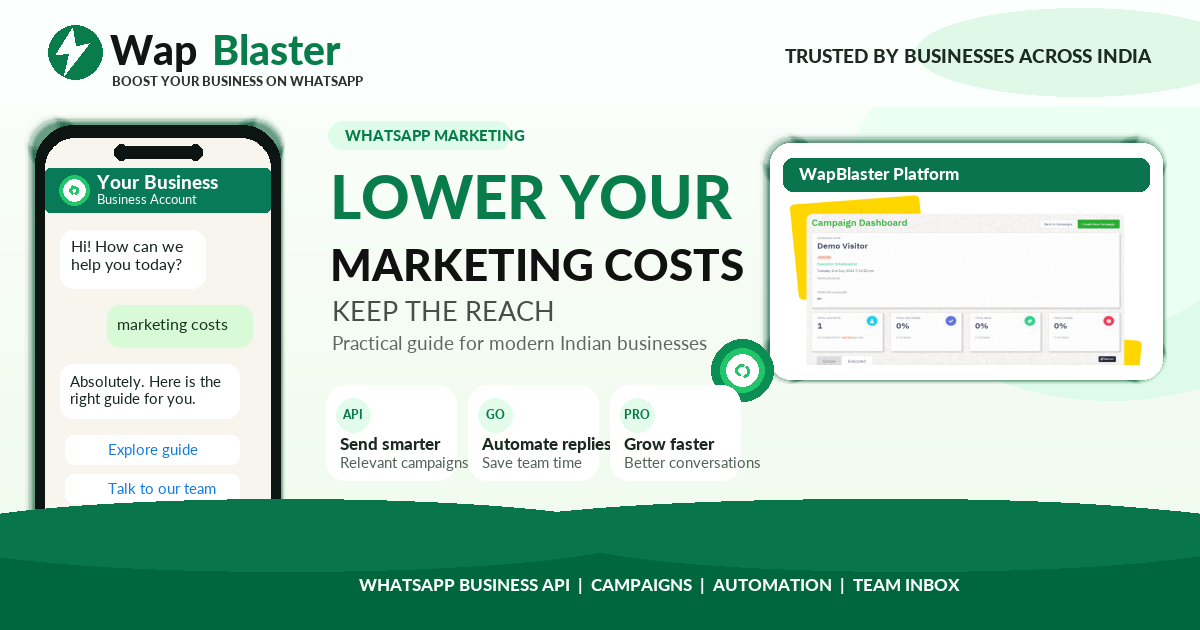
WhatsApp is affordable, but costs add up as you scale because Meta charges per conversation. The good news: smart habits cut spend without cutting reach. Here are 8 practical ways to lower WhatsApp marketing costs in 2026.
Where the money goes
You pay per 24-hour conversation, and the price depends on the category and country. Wasted conversations, on cold or wrong contacts, are where budgets leak.
8 ways to cut costs
- Clean your list: remove invalid and unengaged numbers.
- Segment tightly: message only relevant contacts.
- Group messages: keep exchanges within one 24-hour window.
- Use utility templates where suitable instead of marketing ones.
- Lean on free service windows: reply within customer-initiated chats.
- Time sends well so they get read and acted on.
- Personalise to lift conversion per conversation.
- Track and cut campaigns with poor return.
Measure what matters
Watch cost per conversation and cost per conversion, not just message volume. Optimising for outcomes keeps spend efficient.
How WapBlaster helps
WapBlaster offers affordable plans, segmentation and reporting so every conversation counts. Lower your costs on the WapBlaster platform.
Auditing where your WhatsApp spend goes
Before cutting costs, see clearly where they come from. Break your spend down by conversation category, marketing, utility, authentication, and by campaign, so you can spot the expensive, low-return activity. Often a large share of budget goes to broad marketing conversations that convert poorly, while cheaper utility messages quietly do the heavy lifting. An honest audit almost always reveals waste: conversations to unengaged contacts, promotions sent too widely, or messages that could have been grouped. Fixing what the audit reveals is faster and safer than blunt across-the-board cuts.
Efficiency without sacrificing reach
The goal is lower cost per outcome, not simply fewer messages. Tighten targeting so every marketing conversation goes to someone likely to act, group messages within the 24-hour window instead of opening new conversations, and shift genuinely transactional messages to cheaper utility templates. Personalise so each conversation converts better, extracting more value from the same spend. These moves cut cost while preserving, or even improving, results, because you stop paying for conversations that were never going to convert and concentrate spend where it works.
Measuring return, not just cost
The real test of cost control is return, so measure both sides. Track cost per conversation for spend discipline, but judge success by cost per conversion and revenue per campaign. A campaign that costs a little more but converts far better is cheaper where it matters. Review these numbers regularly, double down on the segments and campaign types with the best return, and prune the ones that consistently underperform. Managed this way, cost reduction becomes continuous optimisation rather than a one-off squeeze, and your WhatsApp channel gets steadily more efficient over time.
Frequently asked questions
Why do WhatsApp costs add up?
Meta charges per 24-hour conversation based on category and country. Wasted conversations to cold or wrong contacts are where budgets leak.
How can I lower WhatsApp marketing costs?
Clean and segment your list, group messages within one conversation window, use utility templates where suitable, and cut low-return campaigns.
Does personalisation reduce cost?
Indirectly yes, because personalised messages convert better per conversation, so you get more value from the same spend.