
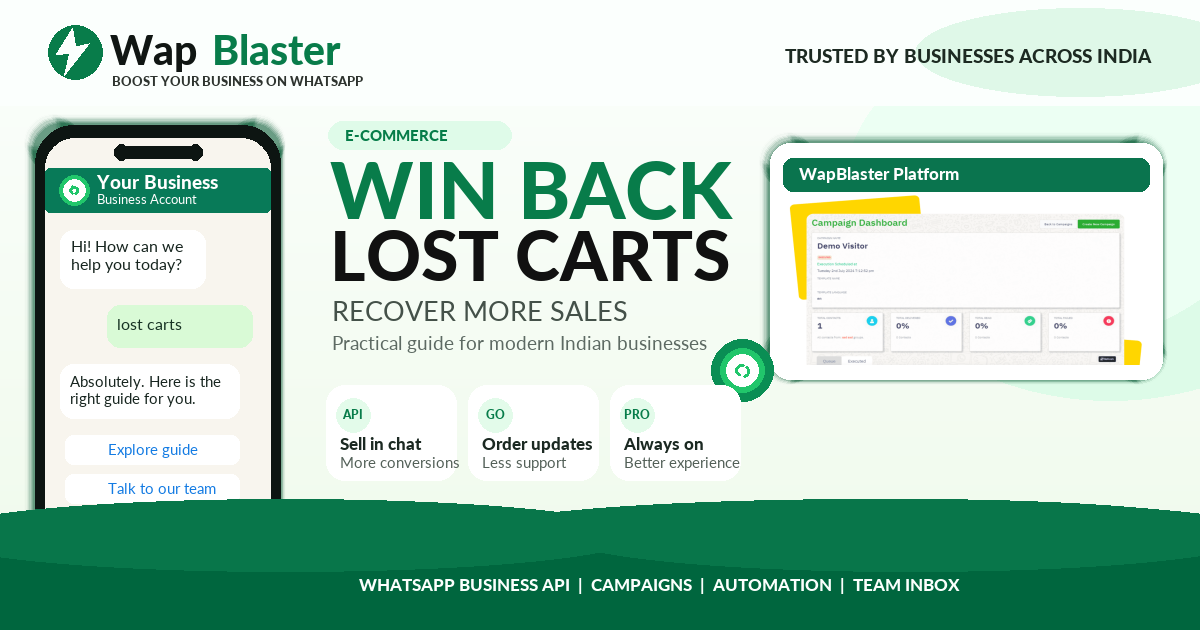
Most online carts are abandoned before checkout. WhatsApp abandoned cart recovery reminds shoppers to complete their purchase in a channel they open within minutes, so you win back sales that email misses. Here is how it works in 2026.
Why carts get abandoned
Shoppers leave for many reasons: distraction, surprise shipping costs, a slow checkout or simply wanting to think it over. A timely, friendly nudge brings many of them back.
Why WhatsApp beats email for recovery
- Far higher open rates, so more shoppers see the reminder.
- Messages arrive within minutes while intent is still high.
- Customers can reply with questions and get instant help.
- You can include the exact cart and a direct checkout link.
How to build a recovery flow
- Detect when a cart is abandoned from your store platform.
- Send a first reminder within an hour with the cart contents.
- Follow up a day later with help or a small incentive.
- Include a one-tap link back to checkout.
- Stop the flow as soon as the order is completed.
Best practices
Keep it helpful rather than pushy, limit reminders to two or three, and make completing the order effortless. Only message customers who shared their number.
How WapBlaster helps
WapBlaster connects to your store and automates abandoned cart reminders with cart details and checkout links. Recover more sales on the WapBlaster platform.
Why WhatsApp recovers more carts than email
Cart abandonment recovery lives or dies on being seen quickly, and this is exactly where WhatsApp beats email. Recovery emails often sit unopened in a promotions tab for hours or days, by which point the intent has cooled. A WhatsApp reminder is typically read within minutes, while the customer still remembers what they were buying and why. That speed, combined with the ability to answer a last-minute question instantly and include the exact cart and a one-tap checkout link, is why in-chat recovery consistently outperforms email on the same audience.
Timing your recovery sequence
Timing is the biggest lever in cart recovery. A strong sequence sends the first reminder within about an hour, while intent is highest, gently nudging the customer back with their cart contents. If they still have not completed, a second message a day later can add reassurance, answer common objections, or offer a small incentive such as free shipping. Keep it to two or three touches; beyond that you risk annoyance and opt-outs. Always stop the sequence the instant the order is completed.
What to include in a recovery message
An effective recovery message is specific and low-friction. Name the customer, show the exact items left behind, and include a direct link straight back to their checkout so completing the purchase takes one tap. Keep the tone helpful rather than pushy, and address the common reasons people abandon, such as unexpected shipping costs or hesitation, by pre-empting them. If you offer an incentive, make it clear and time-bound. Done well, the message feels like a helpful reminder from a business the customer already chose, not a sales chase, and that is what converts.
Frequently asked questions
How does WhatsApp abandoned cart recovery work?
When a cart is abandoned, an automated WhatsApp reminder with the cart contents and a checkout link is sent, often recovering sales email misses.
When should the first reminder be sent?
Within about an hour while intent is still high, with an optional follow-up a day later.
Why is WhatsApp better than email for this?
Higher open rates and near-instant delivery mean more shoppers see the reminder and return to complete checkout.